


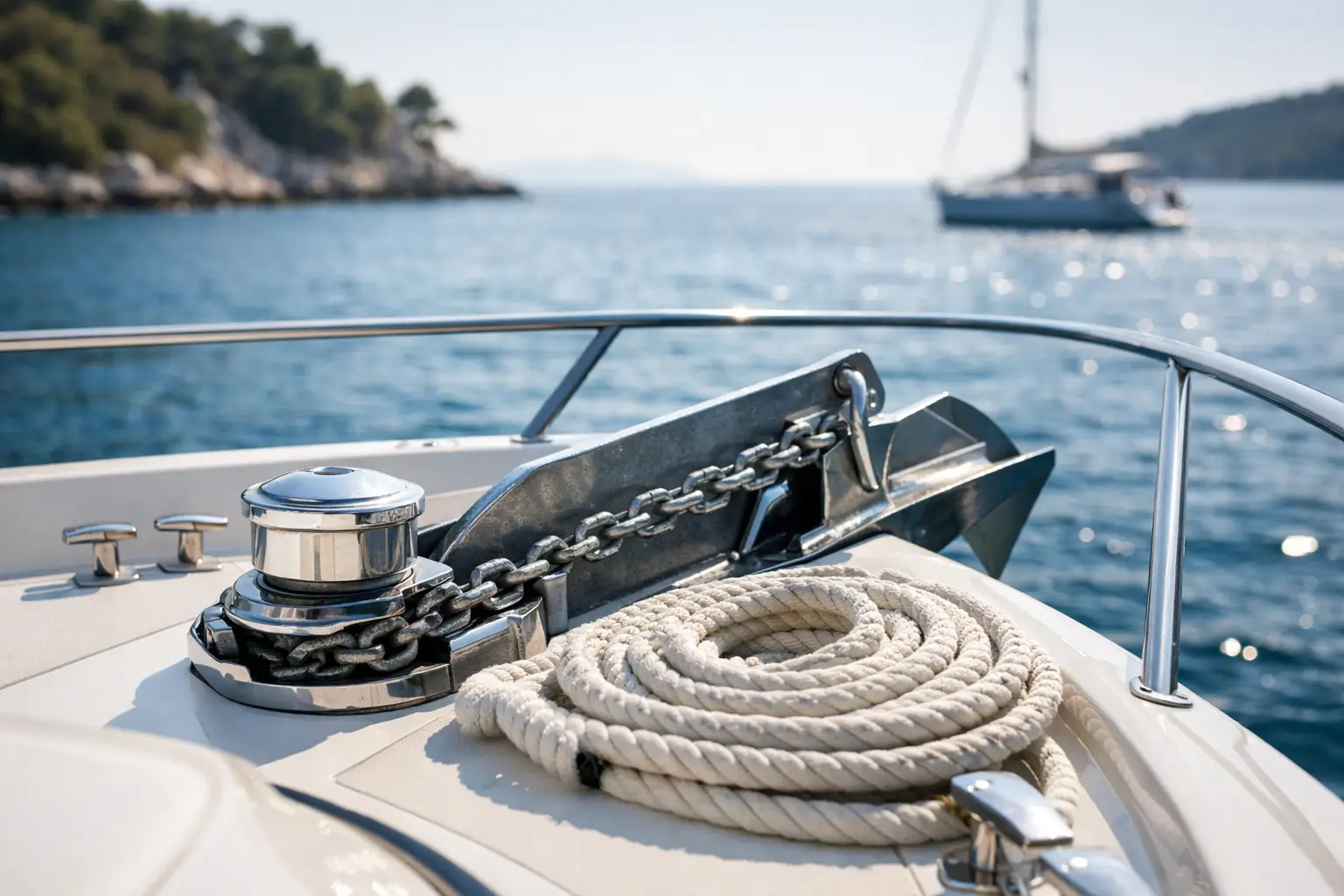
An anchor that cannot be reliably lowered, a chain that skips on the windlass sprocket, or a winch that stalls under load are not minor defects. At moments of wind shifts, nighttime arrivals in a cove, or the need for a quick departure from anchorage, the most important anchoring equipment becomes a safety system that must operate as a whole.
Anchoring is not determined solely by the anchor's weight. The vessel's holding depends on the shape and size of the anchor, seabed type, chain length and mass, correct position of the bow roller, winch condition, and the electrical installation supplying it. Thus, selecting individual components without technical compatibility checks often becomes problematic when the system is most needed.
What Constitutes the Most Important Anchoring Equipment
A reliable anchoring system consists of several interdependent components. The anchor must correspond to the vessel’s displacement, bow arrangement, and usual sailing conditions. The chain must be appropriately sized, classed, and of suitable length, with a profile precisely matching the windlass chainwheel. Between them are connecting elements, while the bow roller, bollards, and possible chain stopper transfer loads to the vessel's structure.
The electrical part is equally important. The anchor windlass can draw very high current when lifting the anchor under load. Inappropriate cable cross-sections, oxidized joints, weak batteries, or defective contactors can cause voltage drops and operational interruptions. Problems are often mistakenly attributed to the windlass itself, though the actual cause lies in the power supply or connections.
Anchor: Shape, Weight, and Actual Seabed
No single anchor is equally suitable for every vessel and seabed type. Sandy, muddy, grassy, and rocky bottoms behave differently. Crucial factors include the anchor’s profile, fluke surface area, center of gravity, and ability to reset after wind direction changes.
Anchor weight is important but not sufficient alone. Too light an anchor hampers embedding, while an excessively heavy anchor may be impractical for the bow roller, increase windlass load, and complicate safe stowage during navigation. Selection considers how the anchor fits the existing holder, clearance during rotation, and secure fastening for navigation.
For vessels regularly anchoring outside designated spots, consideration goes beyond average summer use to realistic wind gusts, bay exposure, superstructure height, and total wind surfaces. Catamarans, for instance, due to wide hulls and large above-water surfaces, may require different approaches than a monohull sailing yacht of similar length.
Chain, Rope, and Proper Release Ratio
The chain transmits load and its weight forms a catenary that dampens sudden jerks. However, a sufficiently slack length of the anchor rode is critical for secure holding. In sheltered coves with stable conditions, a smaller ratio of depth to chain length may suffice, whereas wind, waves, currents, and limited space demand more chain and careful assessment.
Too little chain increases the angle pulling on the anchor and facilitates its dislodgement. Too much chain in a tight bay can endanger other vessels or cause rode entanglement. Experienced crews assess depth along with tide height, weather forecast, maneuvering space, and seabed characteristics.
On smaller vessels or combined systems, part of the rode may be rope. Rope reduces bow weight and is easier to handle but requires proper abrasion protection, secure storage, and reliable chain connections. Every system should clearly mark the chain or rope length so the crew knows exactly how much rode has been paid out without guessing.
The Anchor Windlass Is Not a Standalone Device
The windlass must be dimensioned according to the anchor system's weight, vessel length, expected load, and usage mode. It is important to distinguish the nominal pulling force from actual working conditions. A windlass that smoothly lifts freely hanging chain may lack reserve when freeing an anchor from hard seabed or when the vessel rolls on a wave.
The chainwheel must precisely match the designated chain diameter and type. Similar diameter is not the same as full compatibility. Differences in link pitch, shape, or tolerances can cause slipping, poor engagement, and accelerated wear. This issue is common when the chain is replaced without verifying existing windlass specifications.
The windlass is not intended to hold the vessel on anchor under continuous load for long durations. Once the anchor is set, it is advisable to transfer the load to a chain stopper or appropriate mooring arrangement. An elastic shock absorber, or snubber, can reduce impact loads on the chain, bow roller, and deck equipment. Its design must suit vessel size and expected forces, and attachment points must be structurally verified.
During anchor retrieval, the windlass should not be used to pull the vessel toward the anchor against strong winds or currents. The correct procedure is to bring the vessel closer to the anchor using the engine, while the windlass primarily hauls slack chain. This protects the windlass motor, transmission, chainwheel, and electrical system.
Bow Roller, Connectors, and Securing During Navigation
The bow roller often receives less attention than the anchor and windlass, though it guides the chain and transfers significant loads. It must hold the anchor stable during navigation, allow smooth lowering, and prevent chain contact with gelcoat, stainless steel railings, or deck edges. Any visible wear, sharp edges, or gaps may eventually damage the chain or cause improper guidance.
The connecting element between the anchor and chain must have appropriate load capacity, anti-rotation securing, and geometry not impeding passage through the roller. Swivels can help in some configurations but are not automatically preferable for every system. It is necessary to verify load positioning, bending potential, and joint behavior when the anchor is drawn into the holder.
The anchor must be mechanically secured during navigation. Relying solely on the windlass brake or transmission friction is insufficient protection against anchor dropping in waves. Unintentional anchor release can damage the bow, endanger the crew, and create serious maneuvering risks.
Electrical Installation Determines Windlass Operation
Professional windlass installation goes beyond connecting positive and negative cables. Cable cross-section must be calculated against route length and load current, appropriate protection selected, battery system capacity examined, and connections executed to withstand the marine environment.
Special attention is required for the main battery condition, charging system, and ground connections. If the windlass is connected to the bow battery, its charging method, fuses, disconnections, and voltage drops under simultaneous use of large consumers must be checked. Integration with modern LiFePO4 systems requires verifying allowed BMS peak currents and system behavior on protective shutdown.
Control switches, foot pedals, remote controls, and contactors also form parts of the safety system. Controls must be accessible to the crew yet protected against accidental activation. After installation, voltage under load measurement, function direction testing, protection checks, and practical full system trials are performed.
Preventive Inspection Before the Season and Departure
Anchoring systems usually degrade gradually: corrosion starts at connections, chains wear on frequently used sections, cables heat due to poor contacts, and rollers develop play. Preventive checks reveal such signs before they escalate to failures in the cove.
Before the season, it is recommended to inspect the anchor, chain, and connectors; clean and service the windlass; tighten electrical connections; and test operation under load. The chain locker should also be inspected. Improper chain stacking may cause jams during lowering when rapid response is critical.
Before extended voyages or overnight anchoring, the crew should verify windlass operation in both directions, secure the anchor, confirm visible chain length markings, and have a ready procedure for manual handling if electric drive fails. A spare handle, appropriate tools, and clear task assignments prove valuable under demanding conditions.
Selecting, installing, and integrating the anchoring system requires vessel inspection, existing deck and electrical setups review, and consideration of sailing habits. UnLucky can conduct technical compatibility assessments, recommend suitable components, perform installation, commissioning, and preventive maintenance. Send an inquiry with vessel data, existing windlass model, chain dimension, and usual sailing areas—because safety at anchor must not depend on luck. Because Luck Has Nothing to Do With It.