
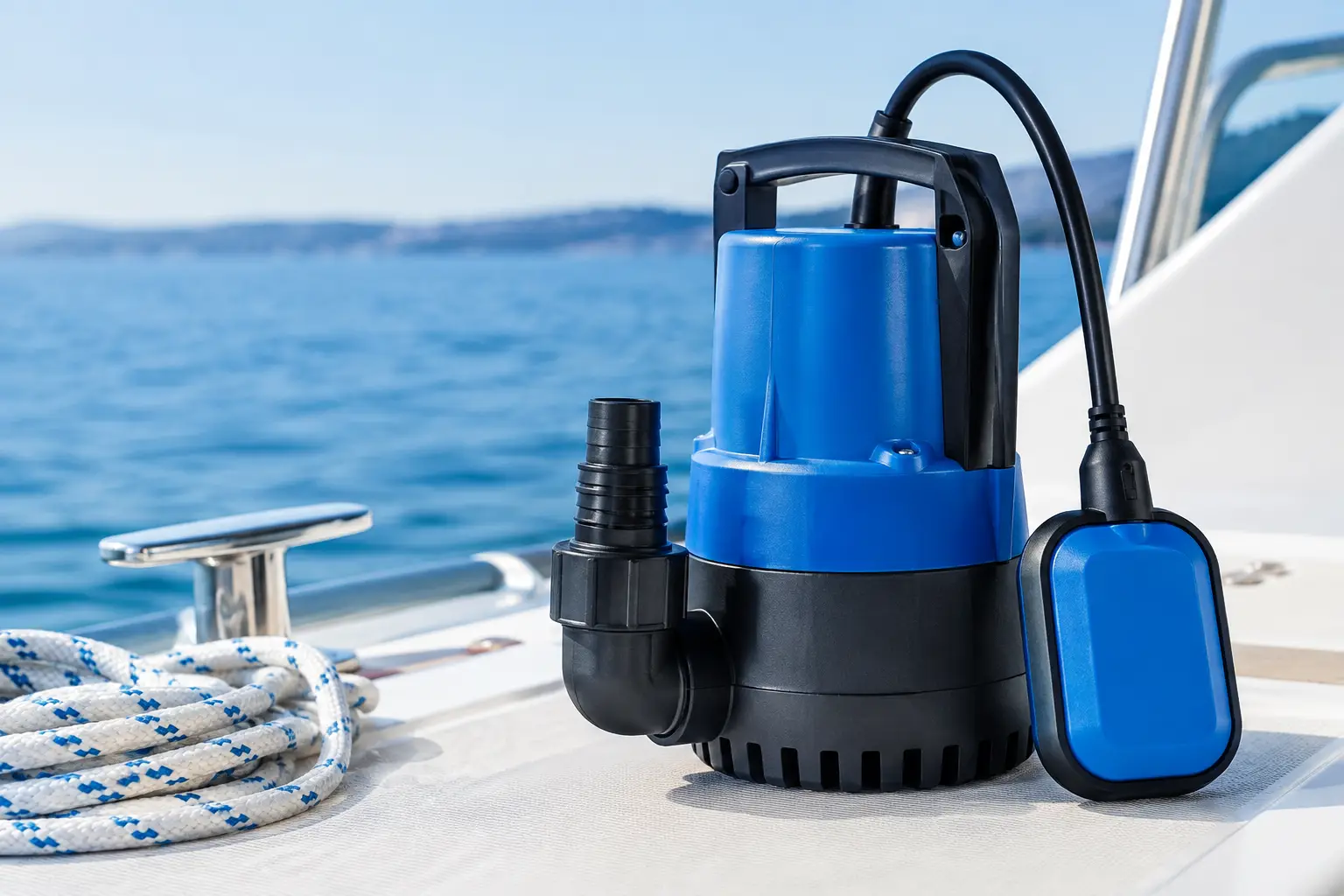
When water appears in the bilge, the question is not just how quickly you can pump it out. It is crucial to know where the water is coming from, the path it takes, the actual capacity of the system, and whether the pump will operate when it is most needed. The best bilge pumps are not necessarily those with the highest declared flow rate, but those properly selected, installed, and verified on your vessel.
On a sailing boat, motorboat, or yacht, the bilge pump is part of the safety infrastructure. It does not replace proper valves, hull penetrations, hoses, or preventive maintenance, but it can provide valuable time to locate and eliminate the source of water ingress. Therefore, the choice must not be based solely on price or the pump's packaging specifications.
Why Pump Capacity Is Not the Only Criterion
Bilge pump flow is usually expressed in liters per hour or gallons per hour. However, the declared capacity by the manufacturer is typically given under favorable conditions—at low lift height, short discharge, and without resistance caused by elbows, check valves, fittings, and hose constrictions.
In an actual installation, the pump must lift water from the lowest point of the bilge to the discharge outlet on the side or stern. Each meter of lift, hose bend, and incorrect diameter reduces the actual flow. A pump rated at 4,000 liters per hour may deliver considerably less in a specific system. That is why, during design, we consider the entire water path, not just the pump's rating.
For a smaller vessel, one automatic centrifugal pump may be suitable as a basic solution. On a larger sailing boat, motor yacht, catamaran, or a vessel with multiple watertight compartments, a system with several pumps is necessary. Separate spaces such as the engine room, forepeak, areas under tanks, or aft lockers can retain water that a single pump cannot effectively reach.
The Best Bilge Pumps According to Intended Use
There is no universal model for every vessel. The proper choice depends on the layout, available electrical power, expected usage, and risks specific to your vessel.
Automatic Centrifugal Pumps
An automatic centrifugal pump is the most common choice for regularly removing small amounts of bilge water. It can operate with an integrated electronic sensor or a separate float switch. Its advantage is simple maintenance and good flow during regular operation, provided it is installed at the lowest accessible point.
Electronic sensors can occasionally activate the pump to check for water presence. Such a solution reduces mechanical parts but may unnecessarily consume energy if the vessel remains disconnected from shore power for extended periods. The float switch is simple and proven but requires sufficient free space to move correctly. Debris, cables, or objects in the bilge can block it.
Diaphragm Pumps for Low Water Levels
Diaphragm pumps are especially useful when pumping water to very low levels is needed or when the suction point cannot be placed directly at the pump. They can run dry for a limited time depending on the design and allow placement of the motor section outside the wet bilge.
Their drawback is generally lower flow compared to centrifugal pumps of the same electrical power. Also, the diaphragm and valves require periodic inspection. Therefore, they are often a good complement to the main centrifugal pump, especially on vessels where a dry bilge and condensate or minor water ingress control are important.
Higher Capacity Pumps for Emergency Situations
Larger vessels or those sailing far from the coast require additional capacity in the event of serious water ingress. This could be a separate high-flow electric pump, an engine-driven system, or the possibility of using an existing fire-fighting or service system if designed for this purpose.
Such solutions only make sense if the system is clearly designed and the crew knows how to operate it. A large pump with undersized hose, weak fuse, or inadequate suction will not meet expectations. In emergency pumping, every component, from the suction strainer to the outlet, must support the planned flow.
Manual Pumps as an Independent Safety Reserve
The manual bilge pump still plays an important role. It does not depend on batteries, fuses, chargers, or the main electrical installation. On sailing boats, it is often mandatory or at least a very reasonable safety measure, but its location must be practical for operation and accessible when the vessel is heeling or in bad weather.
The manual pump should be tested just like the electric one. The lever, diaphragm, suction pipe, and joints must be in good condition, and the crew must know its location and how to operate it. Safety equipment that is not checked before departure does not provide real security.
Components of a Reliable Bilge System
The pump is only one part of the system. Reliable operation is determined by properly sized conductors, fuses, automatic control, hoses, fittings, outlets, and alarms. Special attention is required for electrical installation because the bilge pump must remain available even when the main battery switch is off. This is done by a separate protected circuit based on the pump’s actual load and cable length.
Hoses should have the correct diameter, be as short as possible, and have minimal bends. Corrugated hose can be practical for installation but creates higher flow resistance than smooth hose. If a check valve is planned, its actual effect should be evaluated. It can prevent backflow into the bilge after the pump stops but simultaneously reduces flow and may clog. In many designs, correct routing height and outlet position provide a better solution than adding an automatic valve.
The outlet must be positioned to reduce the risk of seawater backflow into the system, especially when heeling, rolling, or in following seas. It is also important to verify if water can transfer from one compartment to another. Installing an additional pump will not solve problems if the construction, drainage channels, or faulty leaks direct water out of suction reach.
An Alarm is as Important as the Pump
An automatic pump can remove small amounts of water without crew intervention but must not conceal a recurring problem. A high bilge level alarm warns that the main pump is not coping with inflow, a failure has occurred, or water ingress is more severe than expected.
On vessels with monitoring systems, the alarm can be integrated with displays, mobile notifications, or centralized ship system monitoring. However, remote notification is not a substitute for local audible and visual alarms. The crew must immediately receive clear information about which compartment triggered the alarm and be able to quickly check the status.
What to Check Before Selection and Installation
Before selecting equipment, it is necessary to examine the existing bilge and determine where water accumulates, how much space is available for the pump and switch, and the condition of hoses and electrical installation. It is important also to check the capacity of service and starter batteries, the charging method at the marina and underway, and system behavior when the vessel is unattended for extended periods.
During refits, it is often discovered that the problem lies in poorly executed old installations rather than the pump itself. Inadequate conductor gauge, corroded connections, incorrectly placed fuse, or a pump installed above the lowest point can significantly reduce system functionality. Replacing only the pump is then a temporary measure, not a technical solution.
After installation comes commissioning. The pump should be tested with water, automatic activation checked, behavior under load measured, outlet inspected, and alarm function confirmed. Preventive maintenance includes cleaning the bilge, checking the suction basket, testing the switch, inspecting connections, and verifying operation before the season and after any suspicious event.
If you plan to install a new pump, upgrade an alarm, or completely renew the bilge system, send an inquiry with vessel data, existing equipment, and usage method. Technical verification of actual conditions enables selection of compatible components, correct installation, and reliable operation when luck must not be part of the plan. Because Luck Has Nothing to Do With It.