


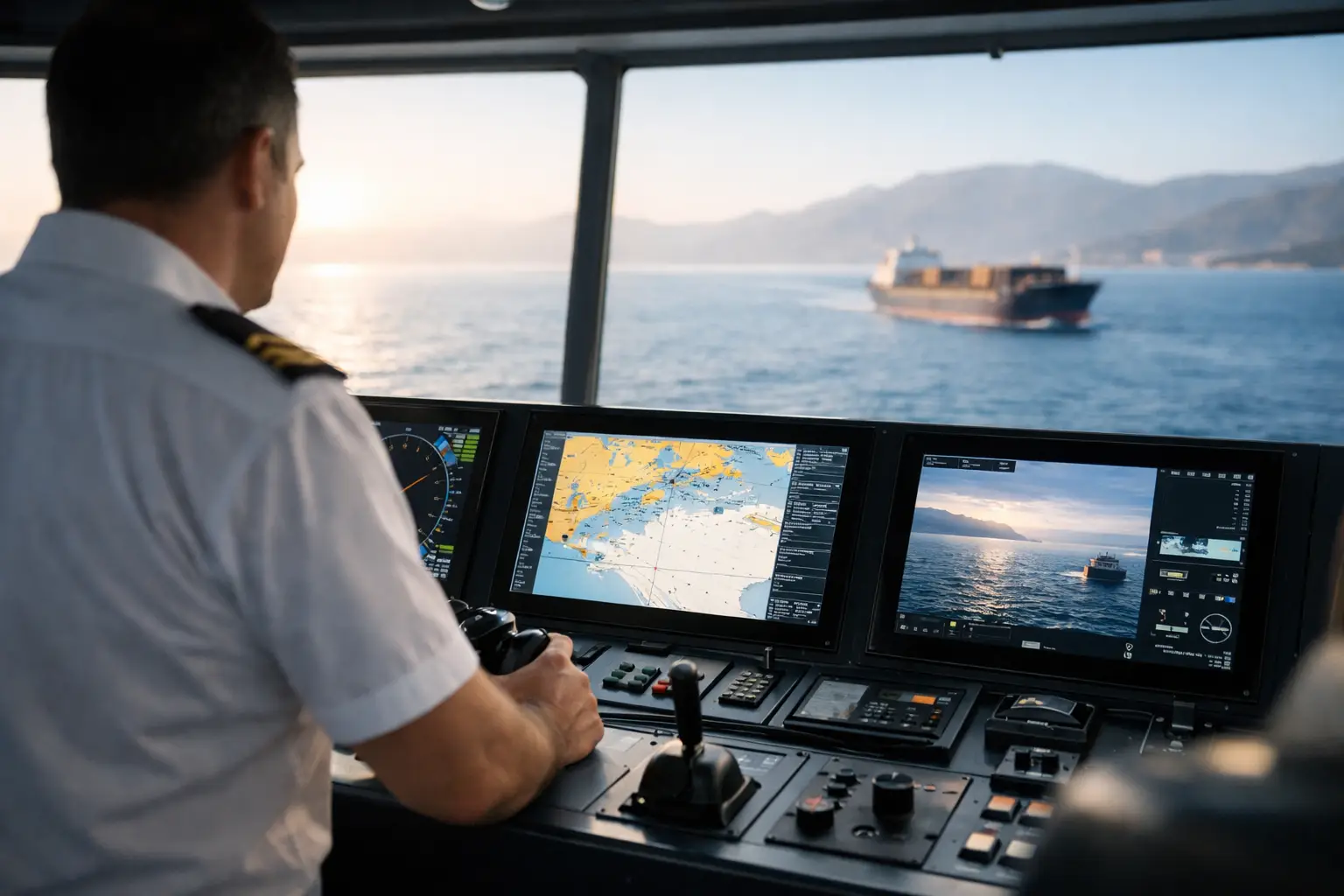
When the bilge alarm sounds in the middle of the night, when the charger stops functioning at the dock, or when the battery system unexpectedly discharges, the issue is not just an isolated component. The problem is the lack of timely information. High-quality onboard system monitoring provides you with an overview of the status of key consumers, energy sources, and safety systems before deviations escalate into failures, loss of autonomy, or reasons to interrupt navigation.
On smaller vessels, some checks can still be performed by the owner through inspection and instrument observation. On yachts, catamarans, charter vessels, or ships with greater energy demands, this approach quickly becomes inadequate. Systems operate simultaneously, the vessel may be unattended, and a single fault in power supply, piping, or ventilation can have consequences that are not visible until they become serious.
What Onboard System Monitoring Must Display
The monitoring system is not just a screen on the wheelhouse. Its function is to collect data from sensors, convert it into understandable information, and alert the responsible person when values exceed set limits. A well-designed system must correspond to the actual installation, vessel usage, and the level of monitoring you or the crew can maintain.
In practice, the most common monitored parameters are service and starting battery status, charging voltage and current, generator and inverter operation, fuel, drinking and waste water levels, engine and engine room temperatures, bilge pump operation, fire and safety contacts, and shore power status. Depending on the vessel, monitoring may include watermakers, refrigerators, air conditioning, bow thrusters, electric propulsion, solar production, and other systems influencing vessel availability.
It is important to distinguish data display from actual monitoring. A screen that occasionally shows battery voltage is insufficient if it does not measure current, state of charge, temperature, and charging sources. Similarly, a bilge indicator without information on pump frequency may miss early warnings of water ingress or a faulty non-return valve.
Information Must Be Useful, Not Just Available
Too much unconnected data can burden the captain or owner as much as too little data. Therefore, each parameter should serve a purpose: confirm normal operation, warn of deviations, or assist in diagnostics.
For example, a voltage drop may result from consumption, a poor connection, a faulty charger, or a battery at the end of its service life. Only the comparison of voltage, current, temperature, and load history yields a technically meaningful conclusion. The monitoring system's value depends on how properly its sensors are selected, installed, and configured.
Why Batteries and Energy Are the Most Common Starting Points
The electrical system connects almost all functions of a modern vessel. Navigation, communication, lighting, pumps, refrigeration, winches, autopilot, and safety devices depend on energy availability. When upgrading to LiFePO4 batteries, adding solar panels, inverters, or stronger chargers, monitoring becomes an integral part of safe energy management, not an optional extra.
The system should clearly indicate where energy comes from and where it goes. This includes the alternator, shore power connection, generator, solar regulators, and any DC-DC chargers. This way, it is possible to see if the battery bank is being charged with the expected current, if the solar system produces according to conditions, and if there is a consumer unnecessarily taxing the system while the vessel is unattended.
For battery chemistries, alarm thresholds are particularly important. Too low voltage, too high temperature, or loss of communication with the BMS must not be treated as mere notifications. Limits are set according to battery specifications, actual load, and system operation mode. There is no universal setting that suits every vessel equally.
Bilge, Water, and Engine Room: Systems That Do Not Wait for Crew Return
Water ingress often starts with small, intermittent activation of the bilge pump. Without pump operation records, the change can go unnoticed for days. Monitoring pump operation, high bilge levels, and pump power enables quicker response, especially when the vessel is moored unattended.
The same applies to the drinking water system. Frequent activation of the pressure pump can indicate leakage, an open valve, issues with the expansion tank, or a faulty non-return valve. For watermakers, pressure, production, salinity, and service interval monitoring facilitates preventive maintenance and reduces the risk of operation outside recommended parameters.
In the engine room, not only engine temperature is monitored. Useful data include space temperature, ventilation, power supply, smoke, leakage, and pump status. For motor vessels and yachts with generators, a combination of several parameters often reveals issues before engine alarms trigger.
Signs not to ignore include:
- unusually frequent operation of bilge or pressure pumps
- deviation in charging current compared to normal operation
- increase in temperature of battery compartment or engine room
- unstable shore power connection and repeated protection trips
- tank level changes inconsistent with actual consumption
Each of these occurrences may have a benign cause, but without system inspection, it is unreasonable to assume a transient sensor fault.
Local Display, Remote Monitoring, and Alarms
A local screen on the navigation desk or wheelhouse is useful during navigation and routine checks. Remote monitoring adds value when the vessel is in a marina, anchored unattended, or at a distant location. Notifications of shore power loss, high bilge level, or voltage drop can enable intervention before batteries are depleted or critical equipment stops working.
However, remote monitoring depends on data connectivity, power supply, and properly configured notifications. If every minor event triggers an alarm, the user will start ignoring warnings. If thresholds are set too wide, notifications may arrive too late. Therefore, alarm configuration must be part of system commissioning, including scenario testing such as loss of shore power, pump activation, or sensor communication loss.
Certain systems may allow remote access or control, but this requires additional caution. Functions affecting propulsion, charging, generator, or safety circuits must not be introduced without thorough understanding of the existing electrical schematic, protections, and crew responsibilities. Status overview and alarm notifications are often the justified first step before implementing more complex control functions.
Integration Is More Important Than Number of Devices
Vessels often have a combination of older instruments, new batteries, separate solar regulators, various network protocols, and improvised connections from previous upgrades. Adding another screen or app does not solve the root problems. It is important to determine what exists, how components communicate, and the limits of the existing system.
Technical compatibility checks include voltage levels, conductor cross-sections, fuses, communication protocols, sensor data availability, and alarm transmission methods. Special attention should be given to separation of critical circuits, installation labeling, and future service options. The system must remain understandable even after several years when diagnostics, component replacement, or refit are necessary.
Sometimes it is rational to start with basic monitoring of energy, bilge, and tanks then prepare for future expansion. In other cases, especially during refit or electrical installation replacement, comprehensive design from the start reduces later work and unnecessary adjustments. The right scope depends on your vessel, routes, crew, and expected autonomy.
From Inspection to Commissioning
A reliable outcome begins with reviewing the existing condition. It is necessary to record energy sources, consumers, distribution cabinets, battery banks, available networks, and critical points where faults have occurred. Afterward, monitoring parameters, compatible equipment selection, display method, and alarm priorities are defined.
Installation includes proper sensor placement, protection and labeling of wiring, neat integration into existing networks, and verification of each measurement channel. Commissioning is not a mere formality: it confirms reading accuracy, tests alarms, and explains to the user what each alert means and the required action.
UnLucky system monitoring considers onboard systems as part of the overall electrical and energy installation. Therefore, in addition to equipment selection, we perform system diagnostics, installation and integration, configuration, commissioning, and ongoing technical support. If you want to understand which data your vessel truly needs to monitor and how to prepare the existing installation for reliable monitoring, request a technical inspection. Because Luck Has Nothing to Do With It.