


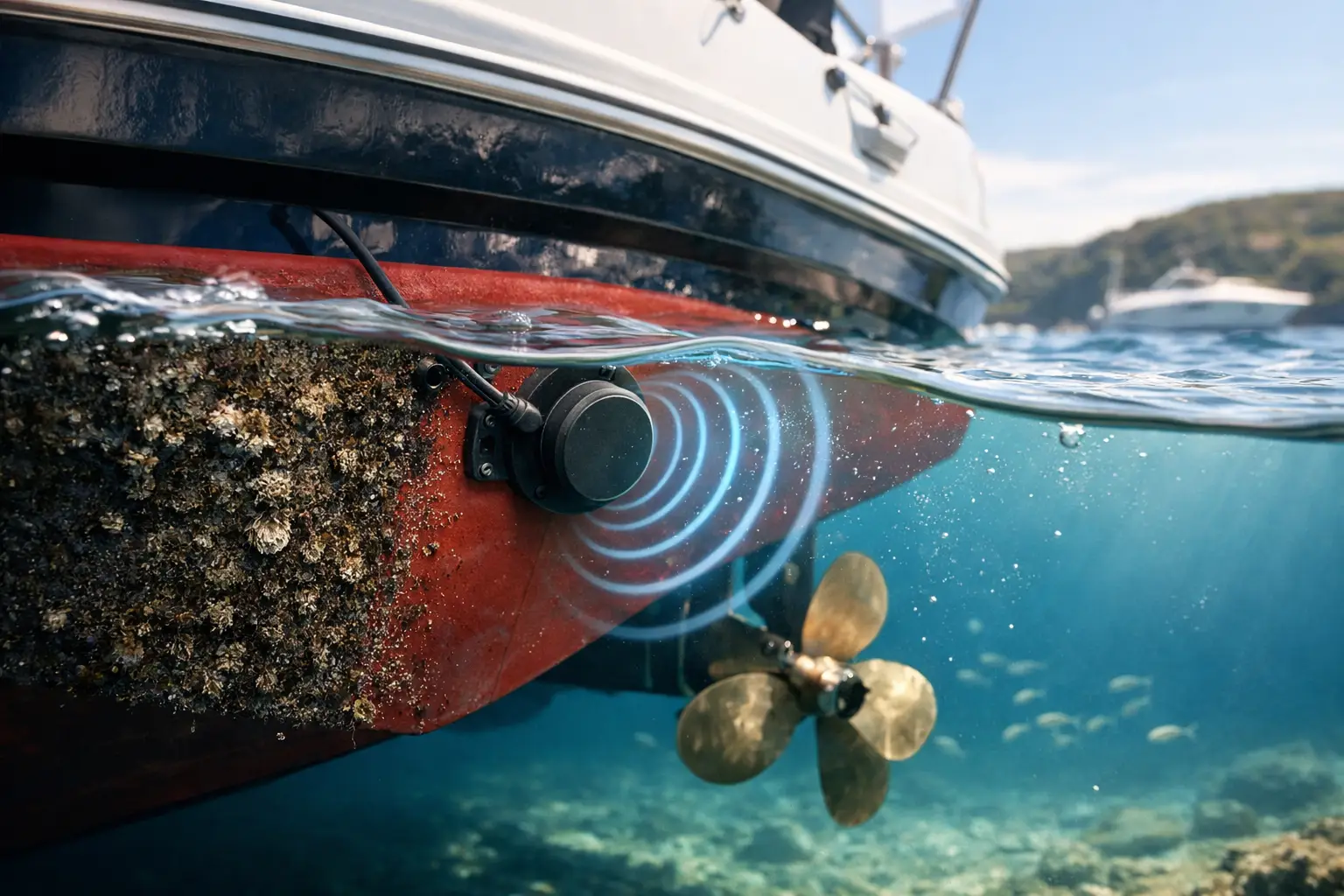
Fouling of the underwater hull is not merely an aesthetic issue. Algae, shells, and other organisms increase the resistance of the vessel through water, raise fuel consumption, reduce speed, and can impair the operation of propulsion, seawater intakes, and sensors. Ultrasonic antifouling for boats is often considered a method to reduce fouling without constant reliance on biocidal coatings, but its true value depends on the vessel, usage patterns, and the quality of system implementation.
For vessels that remain in the marina for extended periods, especially during the warm season in the Adriatic, preventive protection can reduce the frequency of cleaning and the extent of work when regularly hauled out. However, an ultrasonic system is not a universal replacement for every existing antifouling coating nor does it solve already developed fouling overnight. A technical assessment of the hull, compartment layout, existing electrical installation, and actual vessel usage regime is necessary before selection.
How Ultrasonic Antifouling Works
The system consists of a control unit and one or more ultrasonic transducers installed on the interior side of the hull. The transducers generate high-frequency vibrations transmitted through the hull structure into the surrounding water. The intention is not to create perceptible vibrations for the crew but to create conditions that hinder the initial attachment of microorganisms to underwater surfaces.
In practice, the most critical moment is precisely the onset of fouling. If a biofilm develops and algae, shells, and other organisms begin to adhere, cleaning becomes more demanding. Ultrasonic antifouling works preventively, continuously, and with relatively low power consumption. Therefore, it is especially interesting for owners who wish to reduce maintenance efforts between two hull hauls.
Effectiveness should not be evaluated solely by the nominal power of the device. Ultrasonic transmission through laminate, aluminum, or steel construction, the arrangement of transducers, and zone coverage are often more important than the control unit specification alone.
When the System Makes the Most Sense
Ultrasonic antifouling can be a reasonable choice for sailboats, motorboats, catamarans, and workboats that spend most of the year in the water. It is also useful for charter fleets where vessel availability and predictable maintenance directly affect operational costs.
The greatest benefits are usually seen on vessels that remain moored for long periods but are used regularly. Movement through water can slow some fouling; however, it does not protect all parts of the underwater hull equally. Transom areas, zones around propellers, bow thruster tunnels, seawater intakes, and leeward areas often require special attention.
The system can be a good adjunct to a well-chosen coating, regular underwater inspections, and timely cleaning. For vessels hauled out after every use or in the water only very briefly during the season, investment should be evaluated differently. The technical solution must match the actual use pattern rather than assumed needs.
What the Ultrasonic System Cannot Solve
Ultrasonic antifouling does not remove existing shell deposits, heavy fouling, or damage to old coatings. If the hull is already strongly fouled, the first step remains mechanical cleaning and inspection of the underwater protective system condition.
Also, the system does not replace inspections of propulsion, anodes, shafts, seals, seawater intakes, and underwater sensors. Fouling on the propeller or intake basket can impact performance and safety directly, and the condition of these components must be checked during routine maintenance.
Material considerations are important. With composite hulls, vibration transmission and transducer positioning logic differ from aluminum or steel vessels. Structural bulkheads, foam, insulation, double skins, and local reinforcements may limit signal spread. Therefore, the number of transducers should not be determined solely by overall vessel length.
Technical Assessment Before System Selection
Before design, available internal hull surfaces must be examined to determine safe transducer mounting. The surface must allow reliable vibration transmission without air pockets, laminate separation, or inappropriate layers between the transducer and hull structure.
Transducer Arrangement and Hull Coverage
One transducer does not automatically cover the entire hull. Larger sailboats, motor yachts, and catamarans often require multiple zones, and catamarans especially require separate consideration of both hulls. Vessels with engine rooms, tanks, technical bulkheads, or complex interior layouts require initial access determination for mounting locations.
Proper planning includes distance between transducers, heightened fouling risk areas, and service access to the control unit. Inaccessible installations may function initially but will complicate later diagnostics and maintenance unnecessarily.
Power Supply and Electrical Installation Protection
The ultrasonic system requires stable DC power supply, appropriate conductor cross-section, dedicated fuse protection, and clearly marked circuit in the distribution panel. Continuous operation necessitates checking the vessel's overall energy balance, especially when the vessel stays long periods without shore power connection.
For vessels with LiFePO4 batteries, solar charging, generators, or battery monitoring systems, the device should be integrated so its load is properly recorded. Individual consumption can be low, but every continuous consumer impacts overall autonomy calculations.
Relationship With Existing Antifouling Coating
The ultrasonic system is most commonly viewed as a supplement to existing protection, not an automatic replacement. Coating type, coating age, gelcoat or metal surface condition, and local marina conditions influence the combination of protective measures chosen.
Seawater salinity, temperature, water exchange in the marina, and lay-up period create varying conditions even for vessels of the same type. Thus, recommendations that suit one berth may not be equally effective at another location.
Installation and Commissioning
Professional installation begins with a technical compatibility check, not by gluing a transducer to the first available spot. After defining locations, surface preparation, mounting, cable routing and protection, connection of the control unit, and power supply execution according to marine electrical installation standards follow.
After installation, all channels' operation, power supply stability, and system accessibility for future service must be verified. The control unit must be placed in a dry, accessible, and adequately ventilated space, protected from accidental impacts and moisture.
Quality workmanship includes installation documentation. The owner, captain, or yacht manager must know where the system is connected, which fuse protects it, and how to check its operation. This is particularly valuable for seasonal inspections, refits, vessel sales, or interventions by different service teams.
Maintenance and Realistic Expectations
Ultrasonic antifouling has no parts requiring regular painting, but it is not a set-and-forget system. Preventive maintenance includes checking power supply, fuses, connections, control unit status, and physical condition of accessible installation parts.
At every hull haul, documenting the actual hull condition is recommended. Photos before cleaning, seasonal comparisons, and noting areas of increased fouling provide a concrete basis for system assessment. Localized problems can be checked for coverage, transducer operation, or different arrangements if needed.
For BPS Marine Ultrasonic Antifouling and similar systems, success depends not only on the device and its technical datasheet but also on proper sizing, careful installation, and ongoing monitoring in actual use conditions of your vessel.
If considering ultrasonic hull protection, send an inquiry with basic information about your vessel, hull material, berth location, and usage regime. Technical evaluation before installation reduces the risk of incorrect selection and ensures practical system functionality. Because Luck Has Nothing to Do With It.