


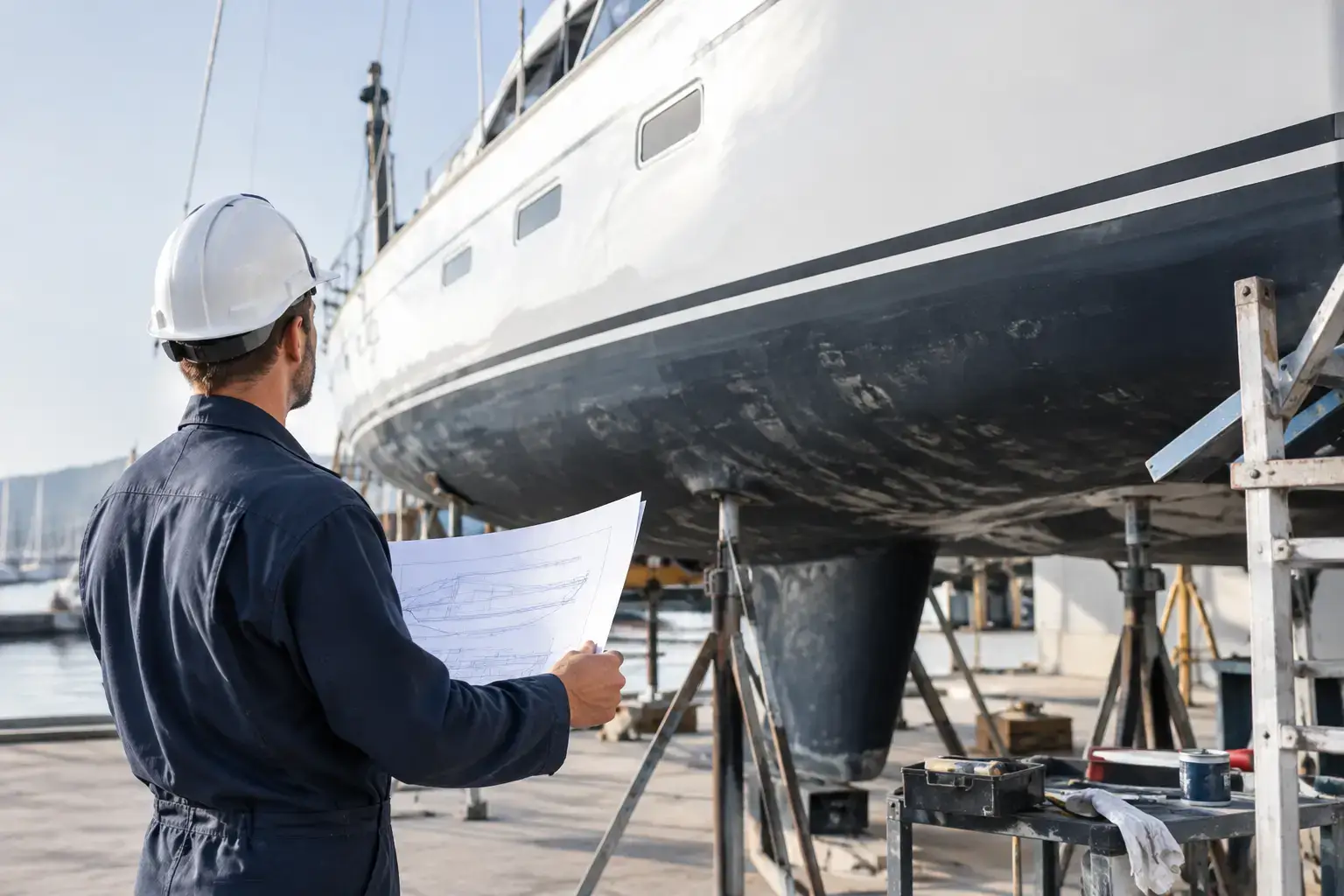
The question of how long a refit takes is usually asked only when the vessel must be ready for the season, charter handover, or longer voyage. By then, the deadline is already important, but the technical condition is often not yet fully clear. A refit is not a single service with a fixed duration. It is a set of related works whose timeline is determined by the actual condition of the vessel, scope of work, equipment availability, shipyard capacity, and execution sequence.
A small, well-prepared refit can last a few days. Complex overhauls of electrical, energy, navigation, mechanical, and deck systems can take several weeks or even months. The key is not an optimistic estimate but a technical inspection before starting and a plan that leaves room for findings discovered after disassembly.
Re-fit duration based on the scope of work
For work limited to routine maintenance and replacement of clearly defined components, often a few days up to two weeks is sufficient. For example, servicing deck equipment, replacing individual chargers, installing a bow thruster into a prepared system, restoring part of an installation, or replacing a navigation device can be done relatively quickly if parts are available, access is good, and technical specifications are known.
A medium-scope refit usually lasts two to six weeks. This group includes navigation modernization, refurbishment of DC and AC electrical systems, installation of LiFePO4 battery systems, solar panels, inverters, monitoring systems, watermakers, or combinations of multiple related upgrades. Time is not only determined by device installation. The integration project must be created, conductor cross-sections and circuit protections verified, mounts adapted, cable routes installed, devices configured, and the system tested under load.
A complete refit, especially on an older vessel or one that has operated long without systematic documentation, realistically takes several months. Such a project may include installation repairs, replacement of distribution panels, energy refurbishment, new navigation network, water systems overhaul, propulsion, deck equipment, and finishing interior work. When multiple contractors work on the same vessel, the schedule must be strictly coordinated. An electrician cannot properly finish the installation if equipment positions are not yet defined, and final panels should not close zones that still need testing.
Deadlines are often determined by conditions unseen at the start
The vessel's external appearance rarely reveals enough about the state of technical systems. Cables can be hidden behind panels, joints corroded in hard-to-reach spaces, and existing protections not aligned with loads planned after upgrades. Therefore, a technical inspection before contracting work is key for a realistic deadline.
In electrical and energy refits, we especially check the existing system topology. It's important to know where batteries are located, how they are charged from shore power, generator, alternator, and solar sources, what protections are installed, and whether the existing installation can handle the new consumption. Installing a larger inverter or lithium batteries without verifying chargers, alternators, temperature conditions, and protective elements is not speeding up the project. It creates risks later paid for by downtime or failure.
The same applies to navigation and monitoring systems. A new plotter, radar, AIS, autopilot, or sensors must be compatible with the existing network and properly configured. Sometimes it quickly becomes evident that it is more rational to renew multiple related elements rather than adapt new equipment to outdated infrastructure. Such a decision may increase the initial scope but often reduces future service interventions and rework.
Refit phases to consider in planning
Installation time is only one part of the total duration. A quality refit begins with condition inspection, discussion about vessel usage, and setting priorities. A weekend cruiser has different requirements than a yacht that spends weeks anchored, a charter catamaran with intense usage cycles, or a professional vessel requiring predictable availability.
After inspection follows the technical specification. Compatible components, equipment locations, necessary adaptations, cable routes, protection, and work sequencing are determined. This phase often prevents the most costly mistakes: purchasing unsuitable equipment, underestimating required space, or planning a system that cannot operate as a whole.
Procurement can significantly affect the timeline, especially for specific equipment, non-standard dimensions, larger battery systems, propulsion components, or parts ordered by vessel model. Availability and delivery time must be confirmed before booking shipyard slots. It's not enough to know the device is available from the manufacturer — the entire logistics chain and delivery to the work location must be verified.
Only then come disassembly, installation, and integration. Finally, configuration, commissioning, and functional testing follow. The electrical system must be checked under real loads, navigation network must exchange data properly, and water and energy systems should be tested before returning the vessel to regular use. Skipping this phase may apparently shorten the refit but only shifts the problem to the first sea trial.
Common causes for deadline extensions
Not all delays indicate poor organization. Some arise from the vessel’s actual condition or external circumstances. Still, most can be reduced by quality preparation. Common reasons for prolongation include:
- hidden corrosion, damaged conductors, water intrusion, or inadequate previous interventions
- scope changes after disassembly has started
- equipment not ordered on time or incompatible with existing systems
- limited vessel access, workspace, or shipyard crane and berth availability
- overlapping work by multiple contractors without a clear technical coordinator
- weather conditions during hull, deck, or external installation work
A special challenge arises when refit is planned just before the main season. Shipyards, cranes, transport, and experienced contractors then have limited capacity. The owner may have all equipment ready, but without a hauling slot or necessary system testing time, the project will be under pressure. For larger works, it is advisable to start planning several months before the desired launch date.
How to shorten refit without compromises
The fastest quality refit is not the one with least preparation but the one with fewest unknowns. Before starting, gather vessel documentation, schematics if available, existing equipment lists, consumption data, and information about actual usage. Photos of distribution panels, battery compartments, engine room, and existing devices often help assess complexity early on.
It is also useful to differentiate necessary works from wishes that can wait. Safety, charging reliability, electrical circuit protection, handling, navigation, and water supply must have priority over aesthetic or non-urgent upgrades. This does not mean other works should be neglected, but the project should be phased according to available time and budget.
One technical partner who can inspect the system, design the solution, select equipment, perform installation, and conduct commissioning reduces responsibility handovers. In complex projects, this is often more important than the individually fastest service. Any ambiguity between contractors causes waiting, which increases cost and risk of season loss.
Plan refit as a project, not a series of repairs
If a vessel has multiple systems near end-of-life, a series of unrelated interventions rarely is the most favorable solution. Battery replacement without charging checks, a new radar without network checks, or a watermaker without assessing energy capacity may solve the problem short-term but create limitations long-term. Refit should be viewed holistically: energy, consumption, control, safety, maintenance, and future upgrades.
For a realistic deadline estimate, an inspection of your vessel and clearly defined work scope are required. Send an inquiry with basic vessel data, existing systems, and desired completion date. UnLucky can perform a technical check, propose project phases, and determine a feasible schedule for installation, integration, and commissioning. Because Luck Has Nothing to Do With It.