


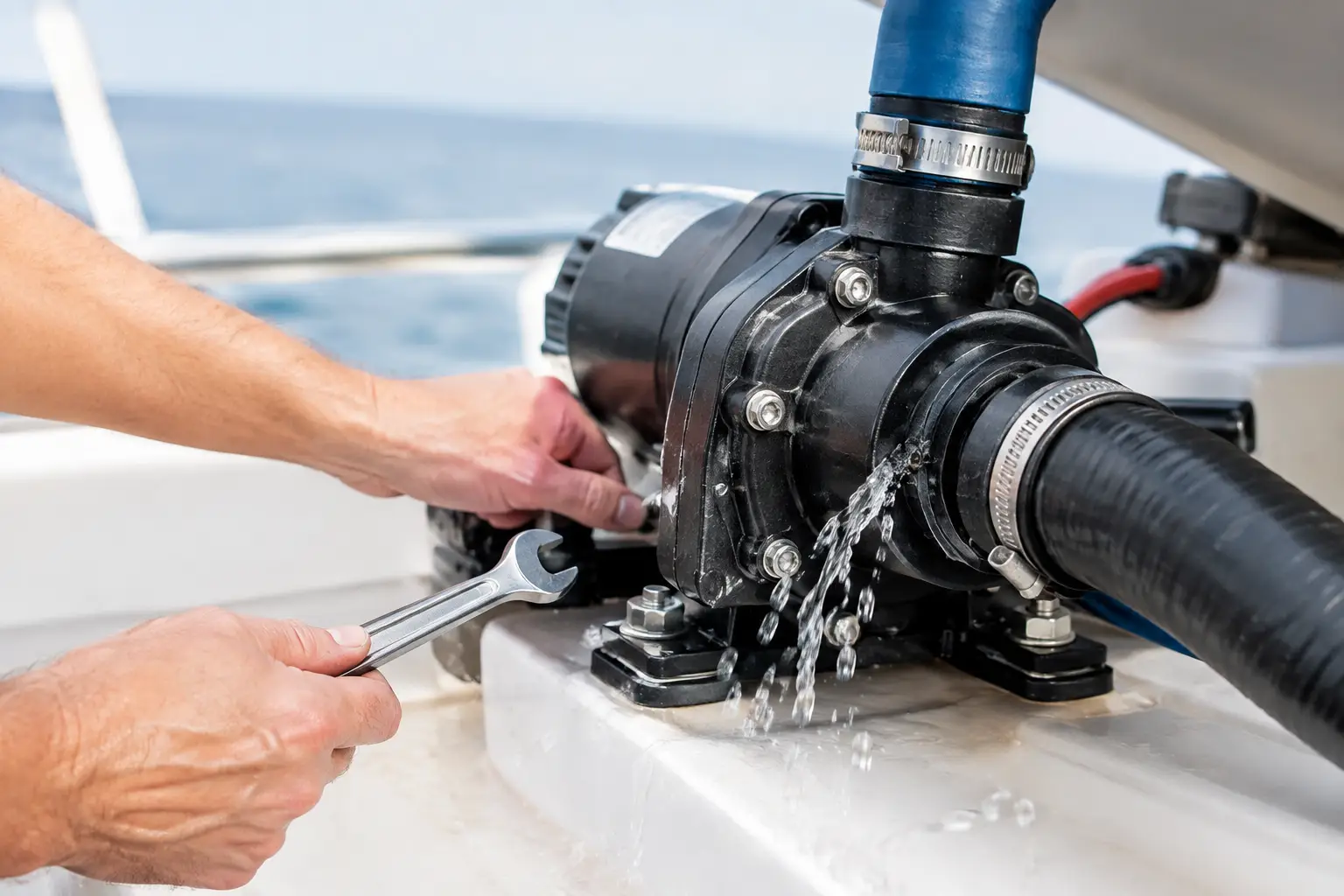
When a boat pump leaks, the problem is not only a wet floor in the bilge or cabinet. Leakage can reduce pressure in the freshwater system, cause frequent pump cycling, drain batteries, damage electrical connections, or mask a more serious seawater ingress. The first task is not to blindly replace the pump, but to determine where the water is coming from, what type of water it is, and under what conditions the leak occurs.
On a vessel, the term pump often covers several different devices: freshwater pressure pump, bilge pump, shower sump pump, toilet pump, circulation pump, deck wash pump, or engine cooling system pump. Each has a different operating environment, sealing materials, and failure consequences. Therefore, the same symptom does not mean the same solution.
First, determine the source of the water
Before disassembly, wipe the area around the pump, connections, hoses, and fittings, and place a dry paper towel or absorbent material under suspicious spots. Then operate the system. For a freshwater pressure pump, this means opening and then closing a tap. For a bilge pump, observe the float switch, check valve, and discharge outlet. Leaks often only appear once the pump builds pressure or when vibrations shift a hose.
It is important to differentiate condensation from actual leakage. Cold water in a warm, humid area can create droplets on pipes, but condensation is usually not localized to one joint and does not increase during pump operation. Salty, sticky, or crystallized water suggests seawater. Odorless freshwater may come from the tank, potable water installation, or shower system. Unpleasant odors or colored traces require caution with sanitary and waste systems.
If water is near distribution boxes, chargers, inverters, batteries, or unprotected connections, safely disconnect the affected circuit if possible. Water and DC electrical systems are not a combination to delay inspection.
Common causes of boat pump leaks
Loose or inappropriate hose connection
The most common cause is not the pump itself, but the fitting. The hose may not be sufficiently pushed over the barb, the clamp may be corroded and loose, or the hose diameter may mismatch the fitting. Even small irregularities in pressure systems can cause dripping that eventually leads to pressure loss.
Two clamps are not automatically a better solution. If the barb is too short, the hose cracked, or the wrong type of clamp is chosen, an additional clamp only conceals the problem. The condition of the barb, hose flexibility, clamp position behind the barb edge, and access for future service should be verified.
Worn seals and pump diaphragm
Pressure pump diaphragms, shaft seals, and O-rings wear out due to dry running, water impurities, winter stagnation, and material aging. Leakage can occur at the pump head and motor joint, under the filter cover, or through the service port. Some models allow a service kit installation, but only if the motor, housing, and valves are in good condition.
A pump that frequently pulses with leaking, cannot maintain pressure, or activates itself while all taps are closed deserves comprehensive diagnostics. Causes may include internal pump leakage or hidden leaks elsewhere in the plumbing network.
Cracked housing, filter, or check valve
Plastic housings are sensitive to freezing, mechanical impacts, and improperly tightened threaded fittings. Cracks may not be visible until the system is pressurized. The same applies to transparent pre-filter covers, which often suffer damage if overtightened or if the seal is dry and deformed.
The check valve in a bilge system can create additional resistance, retain debris, and cause water to return towards the pump. It is not installed in every system by the same principle. Outlet position, loop height, pump capacity, and vessel requirements determine if a valve is needed, where it may be installed, and how it must remain accessible for inspection.
Hose is worn or incorrectly routed
The hose may appear neat but still leak at bends, under clamps, or where it constantly contacts sharp edges. Engine vibrations, tank movements, and hull flexing transfer stress onto the installation. Pay particular attention to hull penetrations, areas behind furniture, and low points where water accumulates.
In seawater systems, additional risks include corrosion of metal components and valve condition at hull fittings. Leaks around the intake should not be interpreted as ordinary pump faults until the entire water path from hull valve to device is checked.
Why frequent pump cycling is not trivial
A freshwater pressure pump normally activates when a tap is opened and stops upon reaching preset pressure. If it cycles every few minutes without water consumption, the system is losing pressure somewhere. This may be imperceptible dripping, a faulty tap valve, boiler, toilet system, connection under the floor, or internal pump defect.
Such operation increases energy consumption and accelerates wear of the motor, pressure switch, and diaphragm. On vessels with limited battery capacity or without shore power, consequences are more pronounced. Extended absence may result in water tank drainage, and the pump could run dry if protection is not properly implemented.
Bilge pumps require a different approach. If they activate more frequently than usual, do not assume rainwater or condensation. First, determine the quantity and origin of the bilge water. An automatic pump is a safety feature, not a replacement for locating water ingress.
What you can check and when to stop
Owners or crew can safely conduct a basic visual inspection: check visible connections, hose condition, clamps, and filters; listen for unusual pump noises; and note when the fault occurs. It is helpful to record whether the problem appears only with a full tank, during navigation, when connected to shore power, after winter, or only when a certain consumer is on.
Do not temporarily stop leaks with household sealants on pressurized joints, nor replace fuses with higher ratings just because the pump starts frequently. Such interventions may complicate later diagnostics and increase the risk of system failure. Special caution is required with pumps connected to seawater, sanitary systems, heating, engine, or electrical devices.
System diagnostics, not just pump replacement
A proper service intervention starts with reviewing the system layout and verifying pump type, voltage, capacity, connection diameter, and control method. Then suction side, pressure line, filters, valves, electrical supply, fuses, and any sensors are checked. If the pump is replaced, the new unit must meet actual system needs, not just fit the existing space.
Undersized capacity may result in poor flow and prolonged operation, while oversize pumps can create unnecessary pressure, noise, and stress on connections. In bilge systems, hose diameter, lift height, outlet position, and float switch control are equally important. Cataloged pump capacities are often measured under conditions dissimilar to your vessel's actual installation.
After installation, perform leak tests, functional load tests, and operation checks in all intended modes. On more complex vessels, pumps can be integrated into monitoring systems with alarms for abnormal operation or high bilge levels. This is not a substitute for maintenance, but significantly shortens response time.
Preventive maintenance reduces leak risk
Before the season, inspect filters, hoses, clamps, and pump mounts. Verify automatic bilge pump operation and test alarms. In winter, freshwater systems must be properly drained or protected from freezing, according to equipment and storage conditions. Pumps must not run dry, and filters should not be installed with damaged or missing seals.
If moisture, frequent start-ups, or pressure drops occur, send an inquiry with installation photos, pump details, and symptom description. UnLucky can perform system diagnostics, technical compatibility checks, and installation and integration of appropriate solutions. At sea, reliability is not left to chance. Because Luck Has Nothing to Do With It.