
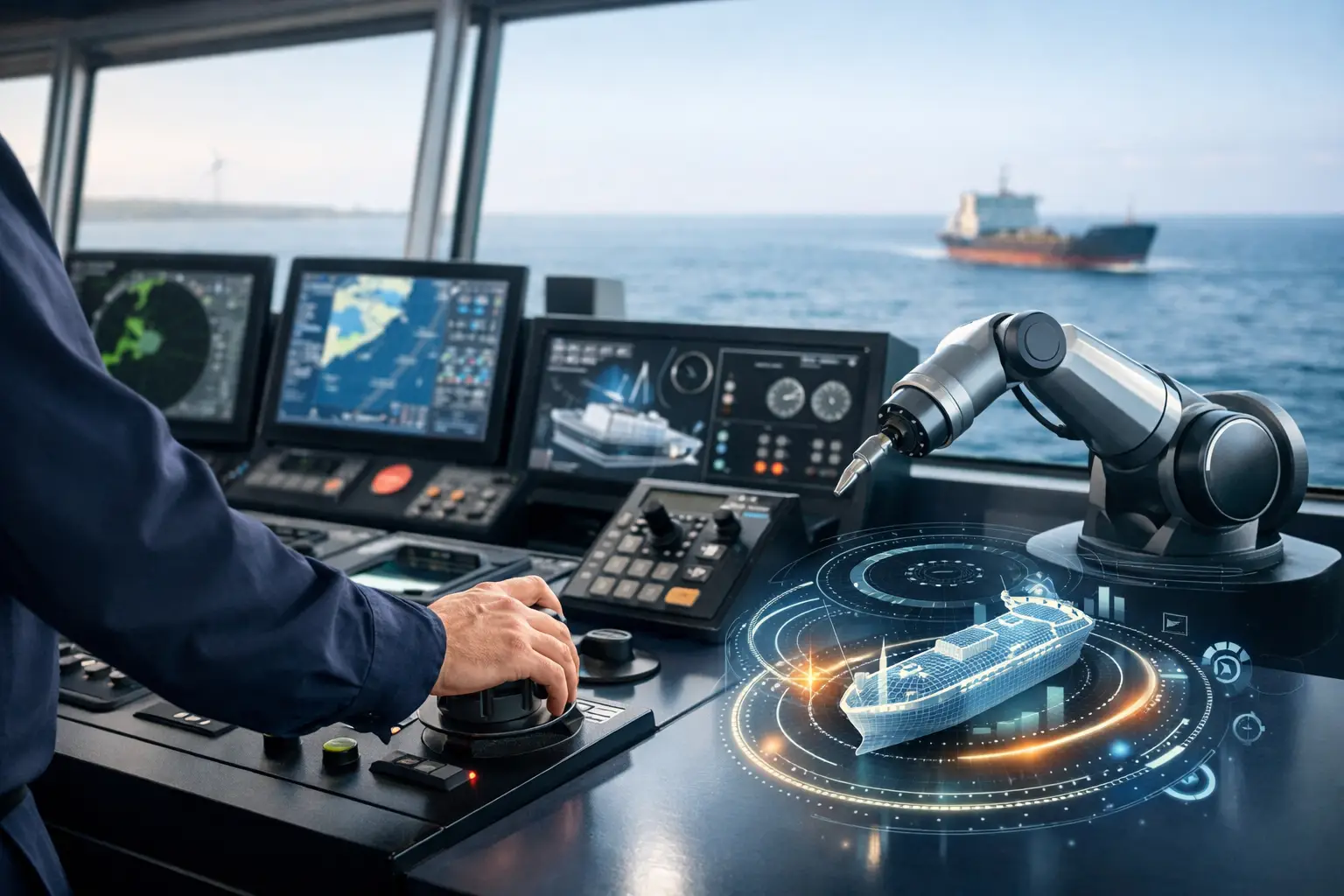
When a bilge alarm sounds in the middle of the night, when batteries discharge faster than expected, or when the water pump operates without apparent cause, the problem is rarely just a single component. Often, a clear overview of system status is lacking. Marine automation enables the key systems of your vessel to be connected, monitored, and logically managed—without unnecessary reliance on guesswork.
Properly executed automation does not mean the vessel must be filled with screens, applications, and automated controls that the crew does not understand. Its goal is simpler: to recognize deviations promptly, reduce failure risks, facilitate energy management, and provide the owner or captain with reliable information for decision-making.
What Does Marine Automation Actually Encompass?
Marine automation integrates sensors, control modules, switches, alarms, data displays, and communication networks into a functional whole. Depending on the vessel type and usage, the system can monitor electrical circuits, battery status, charging, tanks, bilge pumps, temperature, generator operation, water consumption, navigation data, and other functions.
On a smaller sailboat, priorities might include service battery status, solar charging, bilge alarm, and water tank monitoring. On a motor yacht or charter catamaran, requirements are broader: multiple battery banks, generator, inverters and chargers, air conditioning, watermaker, multiple pumps, high power consumers, and the need for clear local and remote monitoring.
Therefore, automation is not a single product. It is a system project that must consider existing installation, available space, voltage levels, communication protocols, navigation regime, and crew capability to properly operate the system.
Why System Monitoring Is Not a Luxury
Many faults on vessels develop gradually. Voltage drop under load can indicate problems with batteries, connections, or cables. Frequent bilge pump activation may indicate water ingress or backflow through a faulty valve. Excessive temperature in battery compartments or engine rooms requires inspection before causing more serious failure.
Without monitoring, the crew often relies on occasional visual inspections. This may be acceptable for simple systems and short daily use, but insufficient for vessels staying longer without crew, performing charter rotations, or sailing at greater distances from home port.
A good monitoring system converts individual data into a useful overall picture. Battery capacity alone is insufficient information. It is necessary to see charging and discharging current, actual state of charge, temperature, voltage of individual circuits, and energy source operation. Only then can the vessel's autonomy be realistically evaluated or not.
Which Functions Have the Highest Priority
Priorities are set after technical inspection, but several areas almost always deserve attention.
Energy System and Batteries
The battery system is the foundation of modern marine automation. Especially with LiFePO4 and sodium-ion batteries, it is necessary to properly coordinate Battery Management System (BMS), alternator, chargers, solar regulators, inverters, and protective devices. Automation can display system status and control certain consumers when capacity falls below a defined threshold.
However, automatic shutdown must not endanger navigation equipment, communication, bilge pumps, or other safety-critical circuits. Separation of consumer priorities must be designed rather than solved by improvised relay connections.
Bilge, Pumps, and Water
Level sensors, pump operation monitoring, and alarms are important for early detection of bilge problems. The system can record how often and how long a pump runs but cannot replace proper installation, appropriate pipe diameter, check valves where needed, nor regular intake inspections.
A similar principle applies to water supply systems and watermakers. Pressure monitoring, tank level, and pump operation can accelerate diagnostics of leaks, empty tanks, or improper pressure pump function. In more complex vessels, automation helps the crew monitor consumption and plan autonomy without unnecessary generator operation.
Navigation and Communication Networks
Navigation instruments, GPS, AIS, radar, autopilot, VHF, and engine displays often share data via NMEA 2000, NMEA 0183, Ethernet, or proprietary networks. Integration must ensure data comes from a reliable source and is available where the crew genuinely needs it.
Poorly executed networks can cause intermittent problems: data loss, duplicate GPS sources, incorrect depth readings, or communication loss with the autopilot. Therefore, adding a new device is not just a matter of free connection on the backbone. Network topology, termination, power supply, device compatibility, and software versions must be verified.
Consumer and Lighting Management
Centralized management of lighting, pumps, fans, anchor windlass, or selected auxiliary consumers can reduce the number of separate switches and simplify control. However, not every function is suitable for full centralization.
Critical systems must have clear local control and understandable manual operation if communication network or control module is unavailable. Automation must improve operability, not create a single point of failure.
Verify Actual Vessel Condition Before Installation
The most common refit mistake is starting from the desired screen or application instead of the currently existing installation. Older cables, unmarked fuses, undersized wiring, oxidized connections, and haphazard additions of consumers can limit any automation plan.
Therefore, technical compatibility inspection covers DC and AC installation status, fuse and switch layout, existing network, charging sources, battery system, available equipment space, and vessel usage. A weekend coastal cruiser has different requirements than a yacht running intense summer charters or spending months moored without permanent crew.
It is also necessary to define who receives alarms and what happens after their receipt. Remote notification of low voltage is only useful if a person can respond, verify the cause, or organize service intervention. Technical system and operational procedure must function together.
Design, Installation, and Commissioning
Quality marine automation begins with a functional plan. Systems to be monitored, alarm types, consumer priorities, local displays, remote access capabilities, and fault scenarios are defined. Then compatible components are selected, and an installation solution designed.
Installation requires discipline in details: properly sized conductors, fuses close to power source, quality connections, moisture and vibration protection, neat labeling, and accessibility for future service. Equally important is configuration—naming each circuit, alarm thresholds, sensor calibration, and data verification on all connected displays.
Commissioning does not end when data appears on the screen. The system must be tested under real conditions: under load, during charging, simulating alarms, and verifying manual control functions. The crew or owner must be familiarized with system logic, warning meanings, and basic procedures before calling for service.
Automation Requires Preventive Maintenance
Sensors, connectors, network connections, and software settings require periodic inspection. Moisture, salt, vibration, and later modifications on the vessel can gradually affect overall system reliability. Preventive maintenance includes alarm review, reading verification, connection checks, compatible device updates, and documentation of performed changes.
If you plan to upgrade the energy system, navigation electronics, pumps, watermaker, or consumer management, send a request for existing condition inspection and integration proposal. UnLucky approaches automation as part of a comprehensive marine system—from design and installation to diagnostics, commissioning, and technical support.
A reliable vessel does not depend on luck. It depends on a system properly designed, executed, and tested before you need it.