
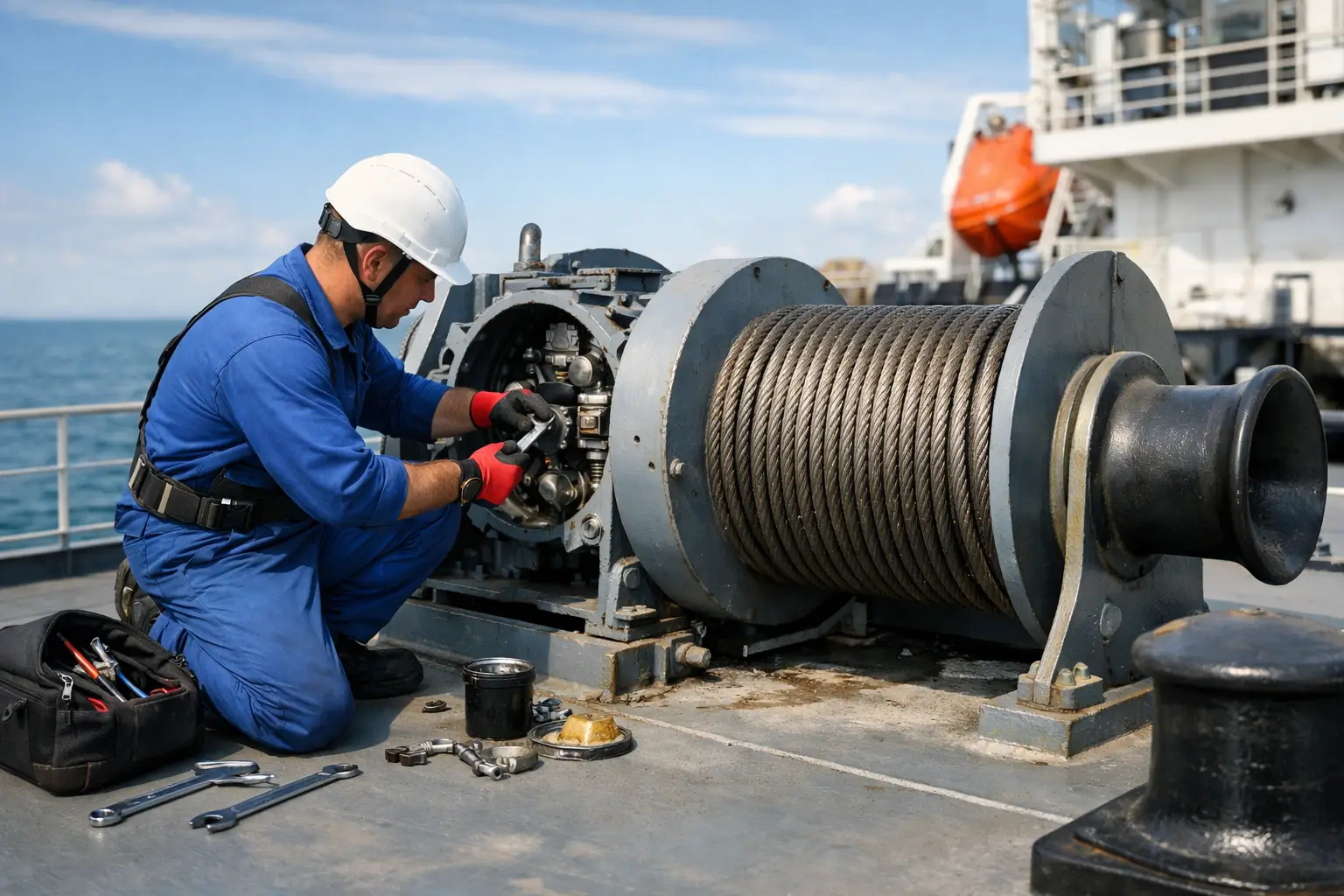
A winch that slips under load, struggles to accept the line, or cannot be properly disassembled is not a minor issue when the vessel is already underway. Marine winch service directly affects crew safety, sail control, anchor system availability, and protection of valuable deck equipment. Malfunctions often do not occur suddenly—they develop through salt deposits, worn working surfaces, improper lubricant, or neglected maintenance.
On sailing yachts, winches endure large and variable loads during sail trimming, mast raising, or line handling. On motor vessels, electric winches, anchor windlasses, and auxiliary deck equipment depend on both mechanical integrity and electrical installation condition. When issues are judged solely by drum rotation, the real cause and risks that appear only under load are easily overlooked.
When Marine Winch Service Is Necessary
Regular preventive maintenance varies per vessel. A winch on a sailing yacht used on weekends during the season does not face the same operational conditions as equipment on a charter catamaran, racing yacht, or yacht with a professional crew. Frequency depends on operating hours, exposure to marine environment, rope type, loads, winter storage method, and previous maintenance.
However, some symptoms require immediate inspection. Irregular or jumping handle operation, rope slip, increased resistance on turning, unusual noises from the gearbox, and corrosion traces indicate the internal mechanism needs to be opened and examined. For electric winches, slow operation, motor or cable overheating, voltage drop under load, fuse activation, and intermittent control failures must be taken seriously.
It is especially risky when malfunction occurs only under higher load. The winch may appear functional in the marina but fail during maneuvers, sail changes, or anchor retrieval under adverse conditions. This is not a situation to rely on crew strength or luck.
What a Professional Winch Inspection Includes
Quality service is not just adding grease through the mechanism opening. The procedure starts by assessing the actual condition of the onboard equipment and understanding its purpose. Identifying the model, capacity, transmission type, availability of spare parts, exposure to loads, and previous interventions that may affect performance is essential.
The mechanical part usually requires disassembly, cleaning, and inspection of the drum, bearings, shafts, gears, pawls, springs, and the rope grip mechanism. Salt, old grease, and fine contaminants can restrict movement of small parts critical for reliable force transmission. Worn pawls or springs, for example, may cause the mechanism to skip precisely when the load is greatest.
After cleaning, component condition is evaluated to decide on parts replacement. Not all damage is equal. Surface oxidation can sometimes be remedied, while worn gears, deformed drums, or damaged housing threads may require extensive repair or equipment replacement. Such decisions must be based on technical condition, not just winch age.
Proper lubrication follows. Excessive grease can attract dirt and slow pawl operation, while incorrect lubricant types may damage materials or fail to provide adequate protection. Therefore, service materials and procedures are chosen based on the specific model design, not by a universal rule for all deck equipment.
Electric Winches Also Require Power System Inspection
For electric versions, mechanical service must be combined with electrical system diagnostics. The motor may be functional, but the required voltage may not reach it due to undersized conductors, oxidized connectors, incorrect fuses, worn contactors, or battery system issues.
Cabling, conductor cross-sections, connections, protections, control switches, relays, contactors, and motor condition are inspected. Voltage measurement without load is insufficient. Voltage drop during operation often reveals issues not visible in brief mooring tests. When battery systems, charging, or power distribution are modernized simultaneously, the existing installation’s capacity to reliably support the winch load must be verified.
Why Rope, Drum, and Load Must Function as a Single System
The winch cannot be considered separately from the rope it handles. Rope diameter, material, and surface influence grip on the drum, required friction, and winch wear. Undersized, oversized, stiffened, or worn ropes can cause slipping, improper spooling, and unnecessary loads.
Similarly, rope routing over guides, stoppers, and blocks matters. Incorrect entry angles transfer loads to the drum and shaft in ways the equipment may not be designed for. Consequences include accelerated wear, deck damage, or hazardous operation for crew members handling the system.
Inspection therefore includes evaluation of the entire operational line, especially on vessels that have altered sail plans, added electric winch drives, or installed new deck equipment during refits. Replacing a single component may suffice, but sometimes issues stem from incompatibility among several system elements.
Preventive Maintenance Before the Season and After Intensive Use
The best time for service is not the day before a long trip. Pre-season checks allow ordering parts, organizing work, and testing operation after reassembly. After intensive charter seasons, extended cruises, or regattas, inspecting equipment before winter lay-up or exposure to harsh conditions is equally prudent.
Owners or crew can monitor basic condition indicators between professional inspections: clean drums, smooth handle operation, visible corrosion, rope condition, and unusual noises. However, disassembly without structural knowledge risks losing small parts, incorrect reassembly, or applying inappropriate lubricants. Electric winches add further risk due to high-capacity electrical circuits.
Preventive maintenance is especially sensible for vessels in charter fleets or those with changing crews. The system must be understandable and predictable for users who may not recognize early wear signs. Clearly documented service facilitates scheduling subsequent interventions, managing costs, and technical handovers.
From Diagnostics to Commissioning
If a winch no longer performs adequately, the first step is not automatic replacement of the entire assembly. Diagnostics distinguishing mechanical faults from power, control, or installation issues is necessary. Only then can realistic recommendations be made: servicing the existing winch, replacing worn parts, refurbishing the electrical section, or choosing a new compatible system.
When replacing equipment, checking base load capacity, fastening layout, service access, electrical requirements, circuit protection, and compatibility with existing ropes and deck arrangements is essential. A cheaper component requiring installation compromises often leads to higher costs and restrictions later.
UnLucky approaches winches as part of an integrated marine system. After inspection and technical compatibility verification, we can perform service, install and integrate electrical components, configure controls, and test operation under suitable conditions. The scope of work, parts availability, and timelines are confirmed via a tailored offer after assessment of your vessel’s condition.
If you notice slipping, difficult operation, or electrical irregularities, send an inquiry before the winch limits your next maneuver. Reliable deck equipment operation is no matter of chance. Because Luck Has Nothing to Do With It.